Classes in the Dining Room: Dr. Lillis Wood-Starr
Gospel in Action
A woman doctor began teaching healthful living in a few Adventist homes near Loma Linda. Within months ministers, mothers and a whole city’s schoolchildren were listening, and Ellen White told the church not to stand in her way.
Light that others can see
Jesus said, “Let your light so shine before men, that they may see your good works, and glorify your Father which is in heaven” (Matt. 5:16). In Joppa there was a woman named Dorcas who “was full of good works and almsdeeds which she did” (Acts 9:36). When she died, the widows showed Peter the coats and garments she had made. Her kindness had opened hearts all over the town, and when she was raised, “many believed in the Lord” (Acts 9:42).
The story of Dr. Lillis Wood-Starr is the story of good works that people could see. She did not preach from a pulpit. She taught in kitchens and dining rooms, and doors opened that sermons had not opened.
A burden for the towns around Loma Linda
In 1905 the church bought the Loma Linda property in southern California. Ellen White was burdened that the new sanitarium should be more than a hospital. W. C. White later explained that she wanted it to be “a center of influence” from which the principles of healthful living would be taught in the cities around it. Redlands, Riverside, San Bernardino and Los Angeles were named again and again.¹
The leaders already had more than they could carry. But the counsel kept coming, so Elder J. A. Burden and Ellen White prayed and planned, and after a time Dr. Lillis Wood-Starr was asked to lead this work outside the sanitarium.²
From church homes to the homes of the city
She began in the homes of church members, teaching cooking, healthful dress and general hygiene, with sanitarium helpers giving practical demonstrations. The Adventist sisters were soon deeply interested and began bringing their neighbors.³
The rooms filled. W. C. White remembered what happened next. When the leader asked what could be done, some well-to-do woman who was not an Adventist would say, “I have a room larger than this. You may have the meetings in my house if you choose.” That was exactly what Dr. Starr hoped for. Once the classes moved to the large dining room of an influential lady, that lady and her friends brought in other women who were not Adventists. Practical lessons on diet, food, clothing, rest, exercise and simple nursing reached a large number of influential women.⁴
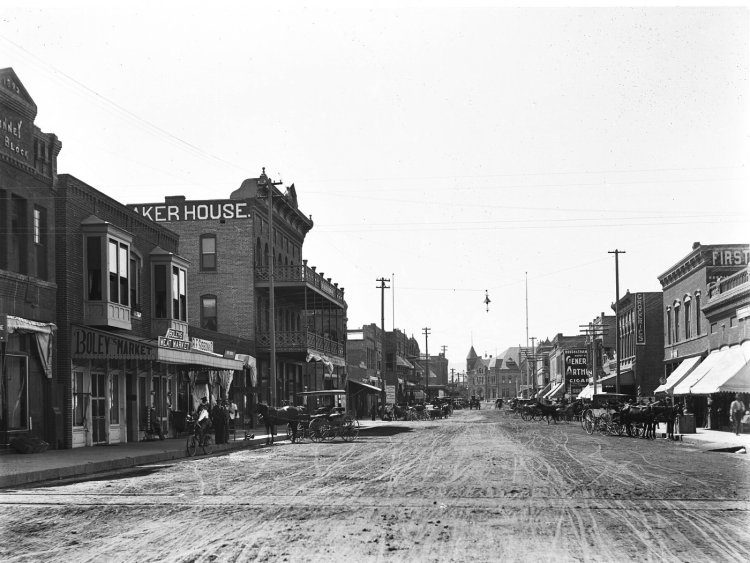
Unknown photographer, Redlands Street Scene in the “Horse and Buggy Days” (c. 1905). Public domain.
Doors open across San Bernardino
In 1907 Ellen White described the work in San Bernardino: “Dr. Lillis Wood-Starr has found many openings for educational work in medical lines in San Bernardino.” People who attended the classes asked for them in their own homes, and the work grew until she could not answer every request. “The ministers from other churches attended and invited their congregations to do so.”⁵
Then the superintendent of public schools heard of it. “At his invitation, Dr. Starr gave health talks in the public schools of the city to as many as fifteen hundred children.”⁵
She also worked with the Woman’s Christian Temperance Union. That brought her into friendship with many respected women of the city, and Ellen White noted that it helped remove prejudice against Seventh-day Adventists.⁶
“Let no hand be stretched out”
Not everyone in the church was pleased. Some feared that Dr. Starr would lose interest in denominational work, and they doubted that teaching health to temperance women would win souls. Ellen White answered them decidedly in a letter to Elder Burden: “Let no hand be stretched out to hinder her in her work.”⁷
Money was the other problem. W. C. White recalled that the sanitarium managers said, “We cannot support this field work. It is largely evangelical and should be supported by the Conference.” The conference replied that it could not support health work that was largely in the sanitarium’s interest. Ellen White settled it: “It is in the interest of both. God has revealed to me that such work should be done in many places.” She proposed that the conference pay one third, the sanitarium one third, and she herself the final third. With that encouragement the work went on vigorously for about three years.⁸
Training students in the city
Dr. Starr also helped train young people. Ellen White had urged the teachers at Fernando Academy to take their older students into Los Angeles during vacation. One summer they did it. The principal, the Bible teacher and a canvassing leader went, with Dr. Starr as matron and leader of the medical work. Nearly twenty students sold Christ’s Object Lessons and The Ministry of Healing, gave Bible readings and nursed the sick. Every day they met to report their experiences. W. C. White called it “this one magnificent effort, wonderfully blessed of God.”⁹
A worker who needed support
The work was not always easy. In February 1908 Dr. Starr wrote to W. C. White from National City, near San Diego. Only three Adventist sisters there had responded to the call to invite their neighbors for “parlor talks on health subjects,” and only one of them continued after the first or second meeting. She was weighing her duty to her husband, her children and the work, and she ended simply: “Pray for me.”¹⁰
Her story is a reminder that medical missionary workers need the prayers and help of the church. W. C. White later grieved that the Loma Linda field work, after three successful years, “was permitted to die of starvation.” The same thing happened to the Fernando summer campaign: “having made one great success, they never tried again.”¹¹
What her work teaches
Dr. Wood-Starr’s work shows why medical missionary work is the best way to take the gospel forward. A cooking class could enter homes where a preacher would never be invited. Health talks reached ministers of other churches, influential women and fifteen hundred schoolchildren. Friendship with temperance workers removed prejudice before any doctrine was discussed.
This is the method of Jesus. Ellen White wrote, “Christ’s method alone will give true success in reaching the people. The Saviour mingled with men as one who desired their good. He showed His sympathy for them, ministered to their needs, and won their confidence. Then He bade them, ‘Follow Me.’”¹²
Any church can begin where she began: one member who knows how to cook and live healthfully, a few sisters willing to invite their neighbors, and a home open for a class. The rest is God’s work. And when such workers grow weary, the church’s part is to stand with them, pray for them, and never stretch out a hand to hinder them.
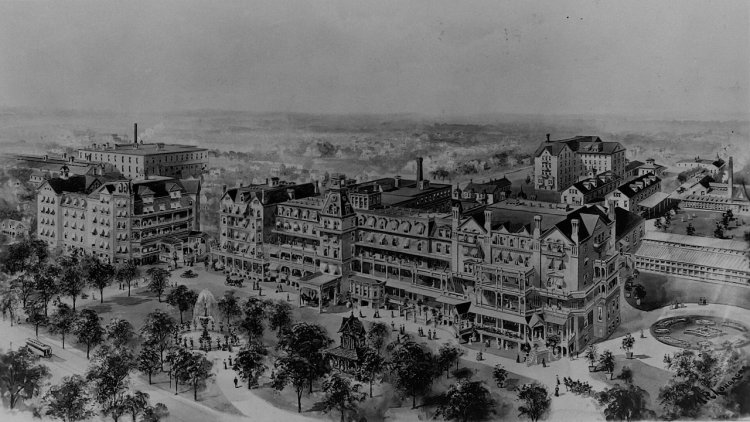
Cover picture: Unknown photographer, Loma Linda Sanitarium (c. 1905). Public domain.
Notes
- W. C. White, address to the Field Training School, January 19, 1931, quoted in Dave Fiedler, d’Sozo: Reversing the Worst Evil, 2nd ed. (Adventist City Missions, 2012), 235.
- Ibid.
- Ellen G. White, “Notes of Travel—No. 2,” Review and Herald, August 1, 1907, egwwritings.org; W. C. White, address, 1931, in Fiedler, d’Sozo, 235.
- W. C. White, address, 1931, quoted in Fiedler, d’Sozo, 235.
- Ellen G. White, Letter 188, 1907, egwwritings.org; published in part in Manuscript Releases, vol. 1, 127–128.
- Ellen G. White, Letter 188, 1907, in Manuscript Releases, vol. 1, 128; Review and Herald, August 1, 1907.
- Ellen G. White to J. A. Burden, Letter 274, 1907, in Manuscript Releases, vol. 1, 128, egwwritings.org.
- W. C. White, address, 1931, quoted in Fiedler, d’Sozo, 236.
- Ibid.
- Lillie Starr to W. C. White, February 28, 1908, in Loma Linda Messages, 361, egwwritings.org.
- W. C. White to Elders Kneeland and Scoggins, May 30, 1931, quoted in Fiedler, d’Sozo, 232.
- Ellen G. White, The Ministry of Healing, 143.
Bibliography
Fiedler, Dave. d’Sozo: Reversing the Worst Evil. 2nd ed. Adventist City Missions, 2012.
Loma Linda Messages. Compiled 1935.
White, Ellen G. Letter 188, 1907; Letter 274, 1907. In Manuscript Releases, vol. 1.
White, Ellen G. The Ministry of Healing. Pacific Press, 1905.
White, Ellen G. “Notes of Travel—No. 2.” Review and Herald, August 1, 1907.
Take it further
Did this speak to you? Ask for more, or ask us to pray with you.
What's Your Reaction?
Comments 0
No comments yet. Be the first to share a thought.