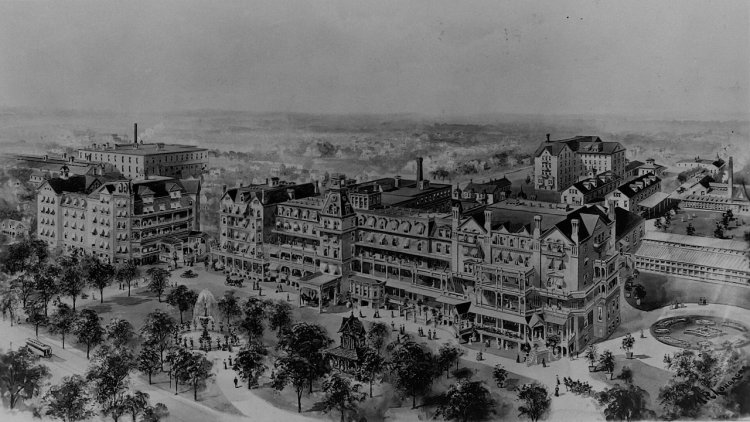
Sunday Got the Crowds, Tindall Got the Converts
Gospel in Action
A former atheist joined health teaching to Bible preaching and took it from city to city. His campaigns showed what happens when the church works the way Jesus worked.
Preach and heal
When Jesus sent out the seventy, He gave them one commission with two parts: “And heal the sick that are therein, and say unto them, The kingdom of God is come nigh unto you” (Luke 10:9). He also sent them in teams. He “began to send them forth by two and two” (Mark 6:7).
Early in the twentieth century a new Adventist named John Tindall took that pattern seriously. Healing and preaching went together in his meetings, and so did a whole company of workers. The results surprised almost everyone.
The man on the train
John Tindall was raised a Methodist, but his faith fell apart when his little brother Willie died. The adults told him Willie was in heaven, yet John had watched them bury him. Then a hell-fire preacher came to town, and what was left of his belief went with him. Later he became a militant atheist who saw it as his mission to free people from “God.”¹
He did well in business and could travel as he pleased. On the first run of an express train from Seattle to Buffalo he was arguing against religion in the smoking car when a tall, quiet gentleman sat down and asked him three questions. The third left him speechless. The man walked out, and Tindall searched the whole train for him, but he was never found. “I believe him to have been a messenger from God to me,” Tindall wrote. From then on he would never again say, “There is no God.”²
The turn came in the mountains of San Diego County. On a prospecting trip he lodged with an elderly man called “Daddy Bell,” who ate no meat, kept the Sabbath, and still led the party up the hills. For days Tindall mocked his religion to see whether he would lose his temper. He never did. When Tindall finally asked him why he kept Saturday, he answered, “Because I believe the Bible.” A leg injury kept Tindall at the cabin for some time, and Daddy Bell nursed him and gave him Bible studies. Reading The Desire of Ages won his heart.³
A plan for the cities
Tindall heard of a school at Loma Linda that trained “medical evangelists,” and he enrolled. He was due to finish in the spring of 1910. That February Ellen White wrote of a night when “the unworked cities were presented before me as a living reality, and I was plainly instructed that there should be a decided change from past methods of working.” She called for companies of workers, trained and sent out two and two.⁴
The college leaders looked for someone to pioneer the plan, and they chose Tindall. He was older than his classmates, a gifted speaker, and at home among educated people.⁵
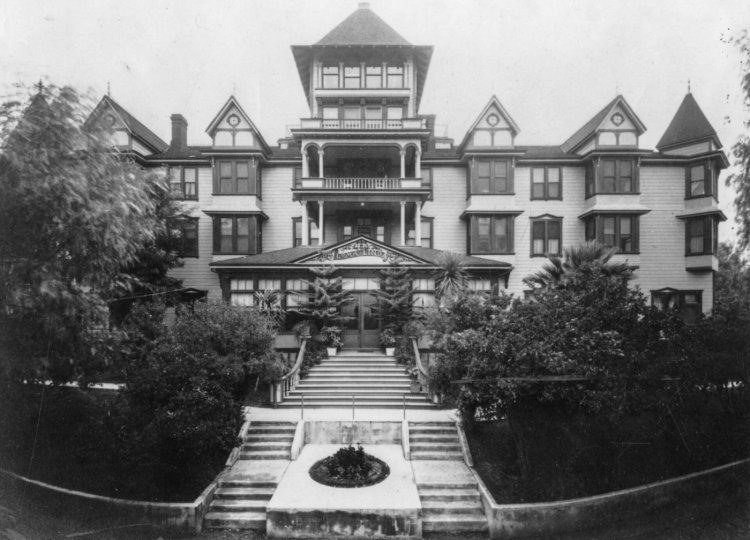
Unknown photographer, Loma Linda Sanitarium (c. 1905). Public domain.
San Bernardino, then Indiana
His first assignment was San Bernardino, a town known for resisting evangelism. The health lectures won over a high-society ladies’ club, and its members persuaded the local paper to cover the meetings for free.⁶
One regular attender was ready to commit but could not give up tobacco, and with a weak heart he feared that quitting would kill him. The team taught him the diet and treatments that would help him, and they prayed with him. Tindall described what followed: “This kindly sympathy, linked with a demonstration of practical godliness, broke the old gentleman’s heart and he wept like a child.” He was set free.⁷
Sixteen people were baptized in San Bernardino, among them Tindall’s own wife. The conference then asked him to hold meetings in Los Angeles, on one condition: leave the health work behind. Tindall was convinced God had called him to health evangelism. He took the work to Hartford City, Indiana, his family’s home town. His mother, a physician brother and his wife, two sisters and their husbands, and thirty-five others were baptized.⁸
The local newspaper editor came to a health talk and opened his columns to the team. A nurse wrote on health, and Tindall wrote on Adventist doctrine. A Church of God congregation about ten miles away had no pastor, so it read his columns at its Sunday services. In the end half of that church accepted the Sabbath and was baptized.⁹
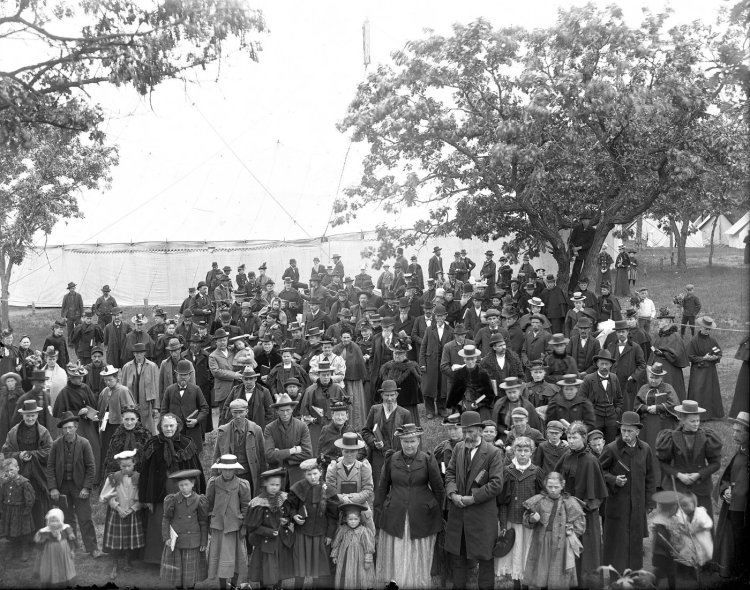
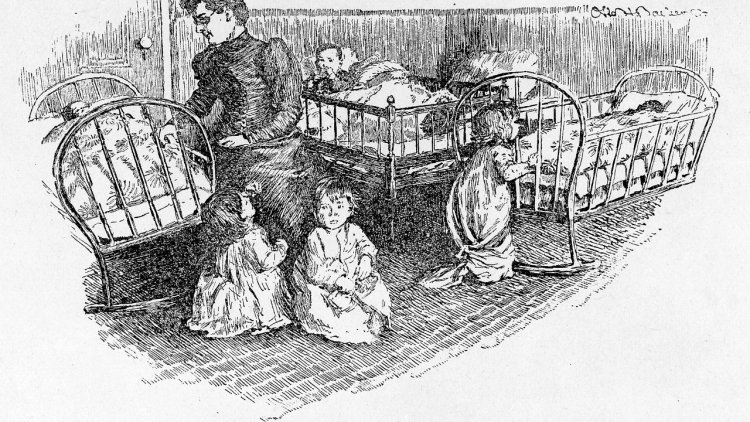
Edward A. Bromley, Seventh Day Adventist’s Camp Meeting at Midway, Minnesota (c. 1890s). Public domain.
Adding a company
The team moved from city to city, usually staying about six months: Indianapolis, Terre Haute, Milwaukee, Tulsa, Oklahoma City and Dallas.¹⁰ Their first five campaigns averaged thirty-six baptisms each. That was good, but Tindall was not satisfied. Ellen White had called for companies, and his team of four to six hardly counted.
There was money for only three salaries: the evangelist, a medical helper and a Bible worker. So he did what Jesus did and recruited volunteers. A businessman, a singer, six nurses and ten other helpers joined the three paid workers, a company of twenty-one. In the six campaigns after the change, baptisms averaged one hundred twenty-one per series.¹¹
The plan was simple. Before the meetings began, the team visited community leaders, rented a good hall and advertised both the health and the Bible lectures. Each week there was a Bible sermon on Sunday night, a health lecture on diet and healthful foods on Tuesday, and one on disease and simple treatments on Thursday. Classes taught cooking, home nursing and Bible topics. Doctors and nurses gave free consultations and treatments and visited people in their homes. Baptismal classes followed.¹² Between seventy-five and ninety percent of the converts stayed in the church.¹³
In Oklahoma City the famous evangelist Billy Sunday held meetings at the same time. A local paper compared the two efforts in an article called “A New Evangelism,” and summed it up this way: “Sunday got the crowds, but Tindall got the converts.” The Review and Herald reported that the Oklahoma City effort added about two hundred members to the church. In Dallas there were one hundred baptisms, and a fine new church building was bought, much of it paid for by converts from the city’s leading families.¹⁴
Opposition and a school
Success brought opposition. Some physicians complained that Tindall was neither a doctor nor a nurse. Instead of fighting them, he went back to Loma Linda in 1923 to study dietetics. A leading church worker asked why he would leave his great work as an evangelist to study diet. “I am certain that evangelism needs dietetics,” Tindall replied.¹⁵
There he befriended a seventeen-year-old student called Bill. A few years later the California conference president, G. A. Roberts, asked Tindall to lead a Field Training School in San Francisco to teach others what he was doing. Tindall asked for Bill as his partner. That young man was W. D. Frazee.¹⁶
The school combined Bible, evangelism and field work with anatomy, dietetics, cooking, home nursing and hydrotherapy.¹⁷ When a family once sued because their adopted son was being raised without meat, Tindall defended them in court with scientific evidence for a vegetarian diet. He presented Bill Frazee as a young man who had never tasted meat, and the case was dismissed.¹⁸ The school closed in 1932, after Roberts was moved and the Depression put pressure on the conference.¹⁹ Roberts later wrote to Tindall that their work had shown “what could be done in combining the two lines of work.”²⁰
What Tindall shows us
Tindall’s campaigns show why medical missionary work is the best way to carry the gospel forward. Health teaching drew people who would never come to a doctrinal lecture. Practical help broke down hearts that argument could not move. And a company of ordinary members, most of them volunteers, multiplied what a single preacher could do.
Ellen White warned what happens when these two lines of work are kept apart: “When the gospel ministers and the medical missionary workers are not united, there is placed on our churches the worst evil that can be placed there.”²¹ Tindall’s work shows the other side of that warning. When they are united, the cities can be reached.
The method is open to every church. It does not need a famous preacher. It needs members willing to learn simple health principles, to visit the sick and to teach the Bible, and to go out two and two, as Jesus sent His disciples.
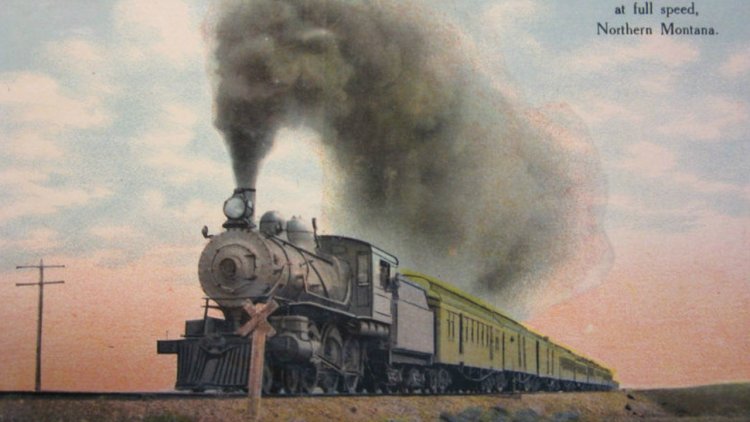
Cover picture: Charles E. Morris, The Great Northern Flyer at Full Speed, Northern Montana (c. 1900). Public domain.
Notes
- Dave Fiedler, d’Sozo: Reversing the Worst Evil, 2nd ed. (Adventist City Missions, 2012), 219–220.
- J. H. N. Tindall’s account in Gospel-Medical Evangelistic Campaign (Redlands, CA, 1922), 161–162, quoted in Fiedler, d’Sozo, 220–221.
- Gospel-Medical Evangelistic Campaign, 162–164, quoted in Fiedler, d’Sozo, 221–222.
- Ellen G. White, Manuscript 21, 1910, egwwritings.org; see Fiedler, d’Sozo, 222–223.
- Fiedler, d’Sozo, 223.
- Ibid.
- Gospel-Medical Evangelistic Campaign, 6, quoted in Fiedler, d’Sozo, 223–224.
- Fiedler, d’Sozo, 224, drawing on Gospel-Medical Evangelistic Campaign, 7–8; Calvin Thrash, John H. N. Tindall: Fifty Years a Gospel-Medical Missionary Evangelist; and The Experiences of Elder J. H. N. Tindall.
- Experiences of Elder J. H. N. Tindall, 2–3, quoted in Fiedler, d’Sozo, 224.
- Fiedler, d’Sozo, 224.
- Ibid., 226.
- Gospel-Medical Evangelistic Campaign, 8–11, summarized in Fiedler, d’Sozo, 226.
- Gospel-Medical Evangelistic Campaign, 7, cited in Fiedler, d’Sozo, 227.
- Thrash, John H. N. Tindall, 5; Review and Herald, January 6, 1921; both cited in Fiedler, d’Sozo, 227.
- The Medical Evangelist, March 15, 1928, 1, quoted in Fiedler, d’Sozo, 229.
- Fiedler, d’Sozo, 229–230; Thrash, John H. N. Tindall, 6–7.
- Thrash, John H. N. Tindall, 7, quoted in Fiedler, d’Sozo, 233.
- Thrash, John H. N. Tindall, 8–9, quoted in Fiedler, d’Sozo, 239.
- James and David Lee, John H. N. Tindall and the Field Training School, 4, quoted in Fiedler, d’Sozo, 239.
- G. A. Roberts to J. H. N. Tindall, April 6, 1937, quoted in Fiedler, d’Sozo, 239–240.
- Ellen G. White, Loma Linda Messages, 59, quoted in Fiedler, d’Sozo, 225.
Bibliography
Fiedler, Dave. d’Sozo: Reversing the Worst Evil. 2nd ed. Adventist City Missions, 2012.
Gospel-Medical Evangelistic Campaign. Southeastern California Conference and the College of Medical Evangelists, Redlands, CA, 1922.
Thrash, Calvin. John H. N. Tindall: Fifty Years a Gospel-Medical Missionary Evangelist.
White, Ellen G. Manuscript 21, 1910.
White, Ellen G. Loma Linda Messages.
Take it further
Did this speak to you? Ask for more, or ask us to pray with you.
What's Your Reaction?
Comments 0
No comments yet. Be the first to share a thought.