Yes, Heaven Will Be Cheap Enough
God’s people have been burned, beheaded and shot for their faith. Is heaven worth all of it? The answer of Scripture, and of everyone who has glimpsed it, is yes.
“For I reckon that the sufferings of this present time are not worthy to be compared with the glory which shall be revealed in us.” Romans 8:18
“Alleluia, Heaven Is Cheap Enough!”
It was December 1844, only weeks after the Great Disappointment. In Portland, Maine, five women knelt in prayer in a small home. One of them was a frail girl of seventeen named Ellen Harmon.
The people around her had given everything for the hope of Christ’s coming on October 22. Farms had been left unharvested and savings given away. Friends had mocked them, churches had expelled them, and the day had passed. Many were weeping. Some were giving up.
While they prayed, the power of God came upon Ellen, and she was shown the path of God’s people to the city of God. At the end of that journey she saw the redeemed standing in glory. Then she describes what happened when they tried to remember all they had suffered on the way:
“We tried to call up our greatest trials, but they looked so small compared with the far more exceeding and eternal weight of glory that surrounded us that we could not speak them out, and we all cried out, ‘Alleluia, heaven is cheap enough!’”¹
The disappointed believers needed that message. So do we. Every Christian, sooner or later, asks the same quiet question: Is it worth it? Is it worth the losses, the mockery, the pressure to give in? Is it worth what it cost the martyrs?
This article answers with one word: yes. Heaven will be cheap enough.
The Scales
Paul put our sufferings and our future glory on a set of scales, and the result was not close. “For I reckon that the sufferings of this present time are not worthy to be compared with the glory which shall be revealed in us” (Romans 8:18).
He said it again to the Corinthians:
“For our light affliction, which is but for a moment, worketh for us a far more exceeding and eternal weight of glory; while we look not at the things which are seen, but at the things which are not seen: for the things which are seen are temporal; but the things which are not seen are eternal.” 2 Corinthians 4:17-18
“Light affliction”? This is the man who wrote, “Of the Jews five times received I forty stripes save one. Thrice was I beaten with rods, once was I stoned, thrice I suffered shipwreck” (2 Corinthians 11:24-25). Paul did not call his sufferings light because they were small. He called them light because of what was on the other side of the scale.
Notice too that affliction worketh. It is not wasted. Ellen White confirms that “trials are God’s workmen, ordained for the perfection of character,”² and adds: “In the future we shall see how closely all our trials were connected with our salvation, and how these light afflictions worked out for us ‘a far more exceeding and eternal weight of glory.’”³
Christ weighed it first
Before any martyr counted the cost, Jesus did. Isaiah saw Him crushed under the sin of the world, and then wrote: “He shall see of the travail of his soul, and shall be satisfied” (Isaiah 53:11). Hebrews says He “for the joy that was set before him endured the cross, despising the shame” (Hebrews 12:2).
On one side of His scale lay Gethsemane, the scourging, the nails and the hiding of His Father’s face. On the other side lay you, and a world redeemed. Describing the moment heaven learned that the plan of salvation would go forward, Ellen White writes: “Then joy, inexpressible joy, filled heaven. The glory and blessedness of a world redeemed, outmeasured even the anguish and sacrifice of the Prince of life.”⁴
So when the redeemed cry, “Heaven is cheap enough,” they are only echoing their Saviour. He looked at Calvary and at us, and He was satisfied.
They Counted It an Honour
Throughout history, men and women have placed their lives on that scale and found heaven heavier. Many of them did not merely endure suffering. They counted it a privilege.
The apostles
When the council in Jerusalem had Peter and the apostles beaten and ordered them to stop preaching, they walked out, the Bible says, “rejoicing that they were counted worthy to suffer shame for his name” (Acts 5:41). Their backs were bleeding, and they were glad.
Polycarp
Around AD 155, Polycarp, the aged bishop of Smyrna, was brought before the Roman proconsul. He was offered his life if he would curse Christ. His answer has echoed for nineteen centuries: “Eighty and six years have I served Him, and He never did me any injury: how then can I blaspheme my King and my Saviour?”⁵ He was burned at the stake.
The Waldenses
For centuries the Waldenses kept the Scriptures alive in the valleys of the Alps, copying the Bible by hand and sending young missionaries out with portions sewn into their clothing. They were hunted for it. Armies drove whole families, the old and the very young, into the snow and over the cliffs. Ellen White devotes a full chapter to their faithfulness.⁶
John Huss
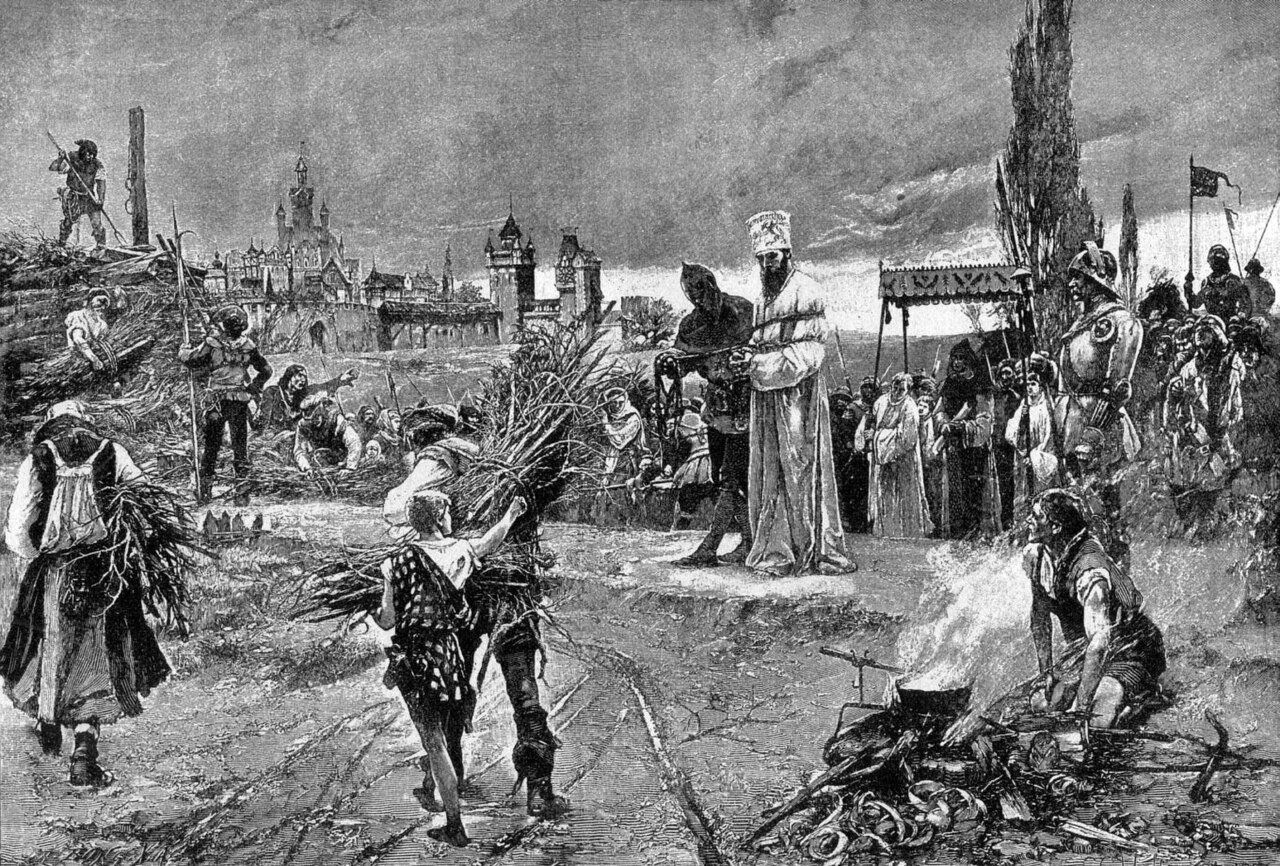
In 1415 the Bohemian reformer John Huss came to the Council of Constance under the emperor’s promise of safe conduct. He was imprisoned anyway and condemned. When a paper crown painted with demons was placed on his head, he answered: “Most joyfully will I wear this crown of shame for Thy sake, O Jesus, who for me didst wear a crown of thorns.” Then, “when the flames kindled about him, he began to sing, ‘Jesus, Thou Son of David, have mercy on me,’ and so continued till his voice was silenced forever.”⁷
A year later his friend Jerome, who had once recanted under pressure, took back his recantation and followed Huss to the same place. He walked to the stake singing hymns, and sang again as the wood was piled around him. When the executioner went to light the fire behind his back, Jerome told him to light it before his face: “Had I been afraid, I should not be here.” Of the two men it was said: “When the flames rose, they began to sing hymns; and scarce could the vehemency of the fire stop their singing.”⁷
Paris, 21 January 1535
After Protestants posted placards against the Mass across Paris, King Francis I resolved to wash the insult away in blood. A vast procession wound through the streets, the king walking bareheaded with a candle in his hand. At short distances along the route, Protestant believers were burned alive, the fires lit as the king approached so that the procession could halt and watch. When one of them was urged to recant, he answered: “I only believe in what the prophets and the apostles formerly preached, and what all the company of saints believed. My faith has a confidence in God which will resist all the powers of hell.”⁸ Their crime was that they read the Bible and believed it.
The Armenian Adventists
In 1915 the storm struck our own church. Of nearly 450 Adventists in the Ottoman Empire, about 250 were killed. Pastor Dzadur Baharian, who had been arrested some thirty times in 23 years of mission work, was ordered to deny Christ and turn to Islam. He refused, and was shot with his hands folded in prayer. The teacher and poet Diran Tcherakian was found with a paper on which he had written Psalm 23:4: “Yea, though I walk through the valley of the shadow of death, I will fear no evil.”⁹
Time would fail me
These are only six. Space and time do not allow us to tell of the millions more whose names are known only to God. With the writer of Hebrews we must say, “And what shall I more say? for the time would fail me to tell” (Hebrews 11:32). They “were stoned, they were sawn asunder, were tempted, were slain with the sword... of whom the world was not worthy” (Hebrews 11:37-38).
Jesus told them what was waiting: “Rejoice, and be exceeding glad: for great is your reward in heaven: for so persecuted they the prophets which were before you” (Matthew 5:12). “Be thou faithful unto death, and I will give thee a crown of life” (Revelation 2:10).
The Empty Chair
Death is not a price anyone pays for heaven. It is the common sorrow of a world broken by sin, and it comes to the faithful and the unfaithful alike. Sooner or later, every one of us sits beside an empty chair at the table. For everyone who has lost someone, heaven holds a promise of its own.
It may be a parent, a child, a husband or wife, a brother, a friend. The funeral ends, the visitors go home, and the silence stays. Peter wrote of believers who are “in heaviness through manifold temptations,” or many kinds of trial (1 Peter 1:6), and few trials weigh heavier than the loss of someone we love. Grief is real, and God does not ask us to pretend otherwise. At the grave of Lazarus, “Jesus wept” (John 11:35).
Yet Jesus called death a sleep. “Our friend Lazarus sleepeth; but I go, that I may awake him out of sleep” (John 11:11). Our loved ones who died in Christ are not lost. They are resting, and they are waiting for the same morning we are.
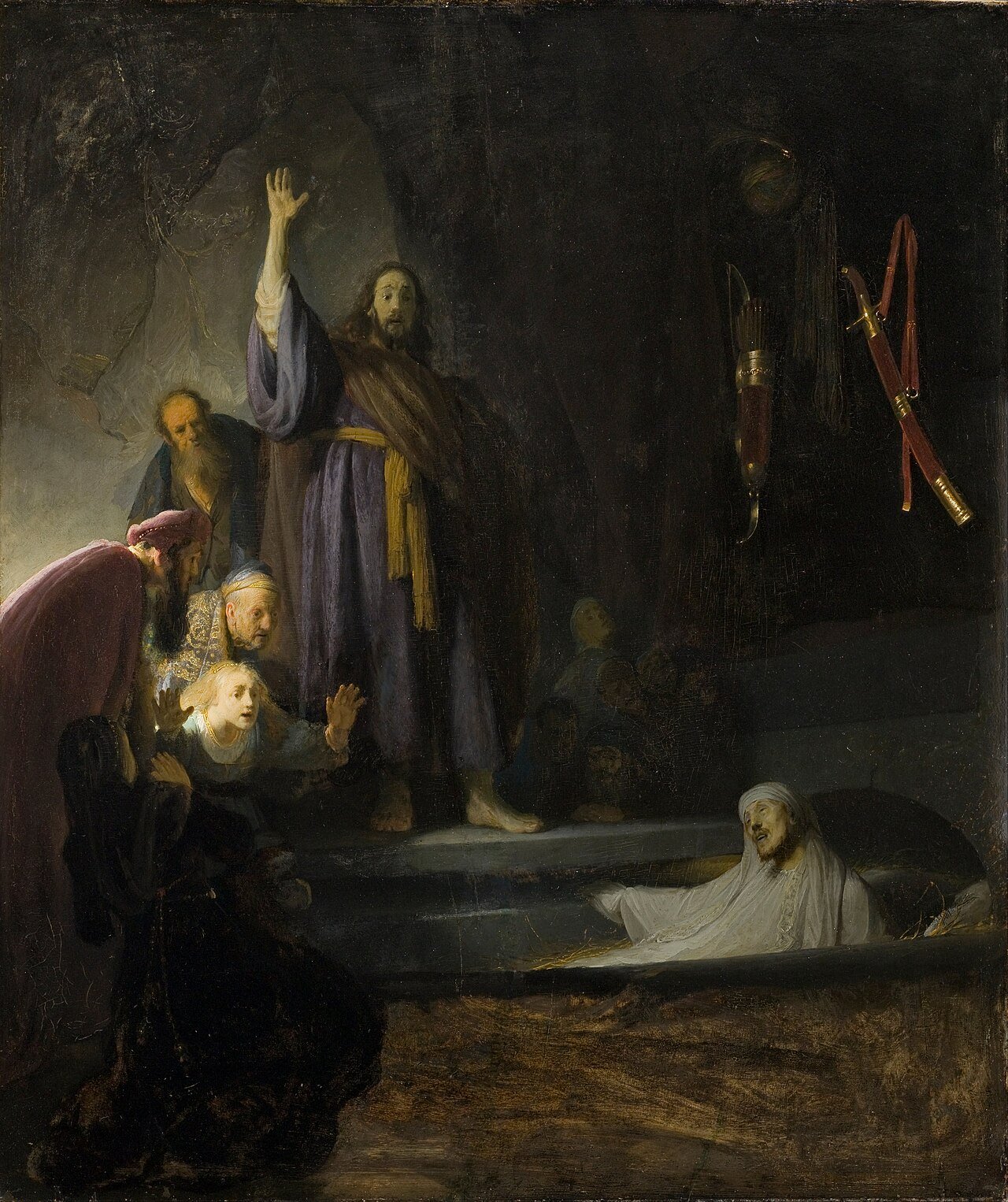
Paul wrote to grieving believers in Thessalonica so that they would “sorrow not, even as others which have no hope”:
“For the Lord himself shall descend from heaven with a shout, with the voice of the archangel, and with the trump of God: and the dead in Christ shall rise first: then we which are alive and remain shall be caught up together with them in the clouds, to meet the Lord in the air: and so shall we ever be with the Lord. Wherefore comfort one another with these words.” 1 Thessalonians 4:16-18
Notice the words together with them. The reunion and the meeting with Jesus happen at the same moment. Ellen White describes the scene: “Little children are borne by holy angels to their mothers’ arms. Friends long separated by death are united, nevermore to part, and with songs of gladness ascend together to the City of God.”¹⁰
Picture it. The mother who buried her baby holds him again. The widow hears the voice she has missed for years. The son who never got to say goodbye says hello instead, and this time there will be no goodbye. “O death, where is thy sting? O grave, where is thy victory?” (1 Corinthians 15:55).
We do not earn heaven by grieving. Heaven is where grief is healed. On that morning the Lamb Himself will dry the tears: “For the Lamb which is in the midst of the throne shall feed them, and shall lead them unto living fountains of waters: and God shall wipe away all tears from their eyes” (Revelation 7:17).
What a Day That Will Be
Not home yet
In June 1910, Theodore Roosevelt, who had just left the American presidency, sailed into New York after a long hunting safari in Africa. Bands played, crowds cheered and the harbour was full of boats.
A story often told says that an elderly missionary was on the same ship. He had given some 25 years of his life to Africa. He walked off the ship with his bags, and nobody was waiting for him. Feeling the sting of it, he complained to God: “Lord, he has been in Africa a few months hunting animals, and the whole country turns out for him. I gave You my life, and no one came to welcome me home.” Then a quiet voice seemed to answer him: “But you’re not home yet.”¹¹
The faithful are often unthanked here. Their welcome is still ahead.
What home will be like
Peter calls it “an inheritance incorruptible, and undefiled, and that fadeth not away, reserved in heaven for you” (1 Peter 1:4). Nothing there decays, nothing is spoiled by sin, and nothing can be taken away. Even sorrow will be gone: “And God shall wipe away all tears from their eyes; and there shall be no more death, neither sorrow, nor crying, neither shall there be any more pain: for the former things are passed away” (Revelation 21:4).
It will be a real place, for real people with real bodies. Jesus said, “I go to prepare a place for you” (John 14:2). The redeemed “shall build houses, and inhabit them; and they shall plant vineyards, and eat the fruit of them” (Isaiah 65:21). “Then the eyes of the blind shall be opened, and the ears of the deaf shall be unstopped. Then shall the lame man leap as an hart” (Isaiah 35:5-6). Even so, “Eye hath not seen, nor ear heard, neither have entered into the heart of man, the things which God hath prepared for them that love him” (1 Corinthians 2:9).
But the heart of heaven is not the gold or the gates. It is a Person. “And they shall see his face” (Revelation 22:4). The redeemed will look at the One who died for them, and they will see His scars. Ellen White writes: “One reminder alone remains: Our Redeemer will ever bear the marks of His crucifixion.”¹² Polycarp will see the King he would not curse. Huss will see the One who wore the thorns. Baharian will see the One he prayed to as the shots were fired.
Then the King will say the words every faithful heart has waited for: “Come, ye blessed of my Father, inherit the kingdom prepared for you from the foundation of the world” (Matthew 25:34).
Cheap enough, but never cheap
Heaven cannot be bought. It is the free gift of God, paid for by the blood of Jesus. Yet it will cost us something: it will cost us self. In another early vision, shown the glory reserved for the faithful, Ellen White counselled believers facing the last days:
“Heaven will be cheap enough, if we obtain it through suffering. We must deny self all along the way, die to self daily, let Jesus alone appear, and keep His glory continually in view.”¹³
That is how the martyrs did it. They looked “not at the things which are seen, but at the things which are not seen” (2 Corinthians 4:18). It is how we will do it too, at the graveside, in the hospital ward, under mockery and pressure, and in the long ordinary days of following Jesus.
One day we will stand where Ellen Harmon stood in vision. We will try to remember our greatest trials, and they will look so small that we will not be able to speak them out. And with the apostles, Polycarp, the Waldenses, Huss and Jerome, the believers of Paris, the Armenian Adventists, and the ones we laid in the grave, we will cry together: Alleluia, heaven is cheap enough!
A Prayer
Father, You see every grave we have stood beside and every tear we have hidden. Lift our eyes from the things that are seen to the things that are not seen. Thank You that Jesus counted the cost and was satisfied with us. Give us the faith of the martyrs and the patience of the waiting. Keep us faithful until we see His face, and the faces of those we love. In Jesus’ name, amen.
Whatever it costs you, it will be worth it. Heaven will be cheap enough.
“For I reckon that the sufferings of this present time are not worthy to be compared with the glory which shall be revealed in us.” Romans 8:18
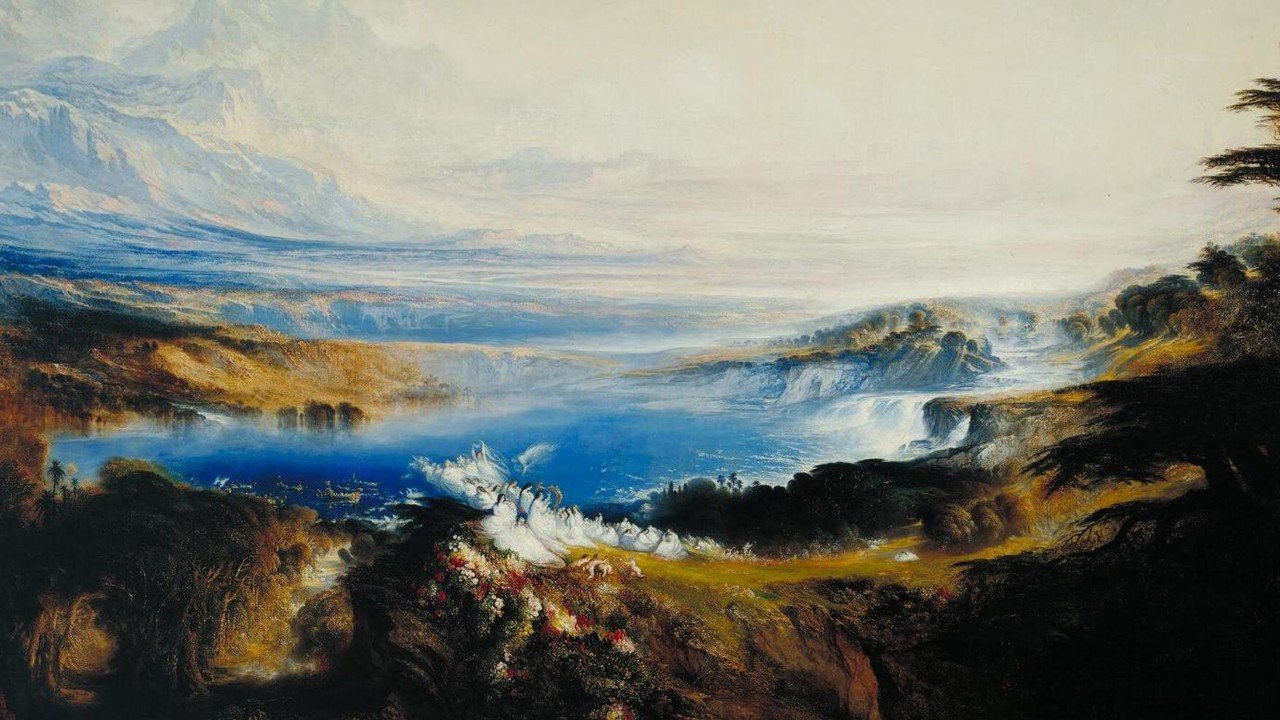
Cover: John Martin, The Plains of Heaven (1851–53), Tate Britain. Public domain, via Wikimedia Commons.
Notes
1. Ellen G. White, Early Writings, p. 17 (EW 17); see also Life Sketches, p. 67.
2. Ellen G. White, SDA Bible Commentary, vol. 6, p. 1099 (6BC 1099), from The Review and Herald, May 6, 1902.
3. 6BC 1099, from Letter 5, 1880.
4. Ellen G. White, Patriarchs and Prophets, p. 65 (PP 65).
5. The Martyrdom of Polycarp, ch. 9, in The Ante-Nicene Fathers, vol. 1.
6. Ellen G. White, The Great Controversy, ch. 4, “The Waldenses,” pp. 61-78.
7. The Great Controversy, pp. 109, 110 (GC 109, 110), and p. 114 (GC 114) on Jerome; J. A. Wylie, The History of Protestantism, vol. 1, p. 176.
8. The Great Controversy, pp. 228-230 (GC 228-230); J. A. Wylie, The History of Protestantism, vol. 2, pp. 213-215.
9. Daniel Heinz, “In the Valley of the Shadow of Death,” Adventisten heute, October 2015, summarized in “Remembering the Armenian Genocide”, EUD News, October 16, 2015. Psalm 23:4 is quoted from the KJV.
10. The Great Controversy, p. 645 (GC 645).
11. A widely told illustration. Versions differ on the missionary’s name and years of service. Roosevelt arrived in New York on 18 June 1910.
12. The Great Controversy, p. 674 (GC 674).
13. Ellen G. White, Early Writings, p. 67 (EW 67).
Ellen G. White quotations can be read in full at egwwritings.org.
Take it further
Did this speak to you? Ask for more, or ask us to pray with you.
What's Your Reaction?
Comments 2
I couldn't stop reading. Thank you so much. I love all the things you bought up. As I read I remember reading them, from the Bible, from Ellen White's writings and your comments we're beautiful and I believe true. Thank you. 🙏🏽
Reply
What a read! Indeed heaven is cheap enough. I don't want to miss. I pray to be there.
God bless you.