The Risk of Love
Every religion claims that its god is powerful. The God of the Bible makes a stranger and far more costly claim: He is love, and love never comes without risk.
“He that loveth not knoweth not God; for God is love.” (1 John 4:8)
What makes God God?
Ask a room full of people what qualities a being must have to be God, and the answers come quickly. He must be all-powerful, all-knowing and present everywhere. All of that is true of the God of the Bible. But walk into a temple, a mosque or a monastery, and you will hear much the same list. If that is all we know about God, we do not yet know what makes Him different.
“This is life eternal”
Jesus said, “And this is life eternal, that they might know thee the only true God, and Jesus Christ, whom thou hast sent” (John 17:3). What kind of knowing did He mean?
Some today, especially in discussions about the Trinity, read this verse as if eternal life depended mainly on getting God’s nature right. Those questions matter, but Scripture’s emphasis lies elsewhere. “The devils also believe, and tremble” (James 2:19). Satan knows exactly who God is and what He is made of. He has no eternal life.
The Bible keeps pointing us to God’s character. When Moses begged, “I beseech thee, shew me thy glory,” God answered, “I will make all my goodness pass before thee” (Exodus 33:18-19). And as He passed by, He proclaimed: “The LORD, The LORD God, merciful and gracious, longsuffering, and abundant in goodness and truth” (Exodus 34:6). God’s glory is His character. Jesus ends the same prayer of John 17 by asking “that the love wherewith thou hast loved me may be in them” (John 17:26). The knowledge He came to give ends in love living in us.
John says it plainly: “Every one that loveth is born of God, and knoweth God. He that loveth not knoweth not God; for God is love” (1 John 4:7-8). Ellen White agrees: “To know God is to love Him; His character must be manifested in contrast to the character of Satan.”¹ The last message of mercy to the world, she wrote, “is a revelation of His character of love.”²
Notice that John does not say God is loving, as if love were one quality among many. He says God is love. “His nature, His law, is love. It ever has been; it ever will be.”³ God is love on the day the sun shines and on the day the flood carries away the house.
“Seeketh not her own”
Love “seeketh not her own” (1 Corinthians 13:5). Paul spells out what that means: “in lowliness of mind let each esteem other better than themselves” (Philippians 2:3). Then, in the very next verses, he shows where such love comes from: “Let this mind be in you, which was also in Christ Jesus: who, being in the form of God... made himself of no reputation” (Philippians 2:5-7).
We expect a god to demand and to be served. But if God is love, He is not self-centred. Ellen White saw this written across creation: “There is nothing, save the selfish heart of man, that lives unto itself.”⁴ At the cross, she says, it will be seen “that the law of self-renouncing love is the law of life for earth and heaven.”⁵
Love before there was anyone to love
If God is love, whom did He love before He created anything?
Love needs someone to love. If God had been a solitary being before creation, His love would have had no object, and He would have needed to create someone in order to be what He is. Creation would have filled a gap in God Himself.
Jesus answers the question on the night before His death: “thou lovedst me before the foundation of the world” (John 17:24). Before angels or stars, love was already flowing between the Father and the Son. God was never lonely and never incomplete. The Father, Ellen White writes, “had an associate—a coworker who could appreciate His purposes, and could share His joy in giving happiness to created beings.”⁶
Not need, but overflow
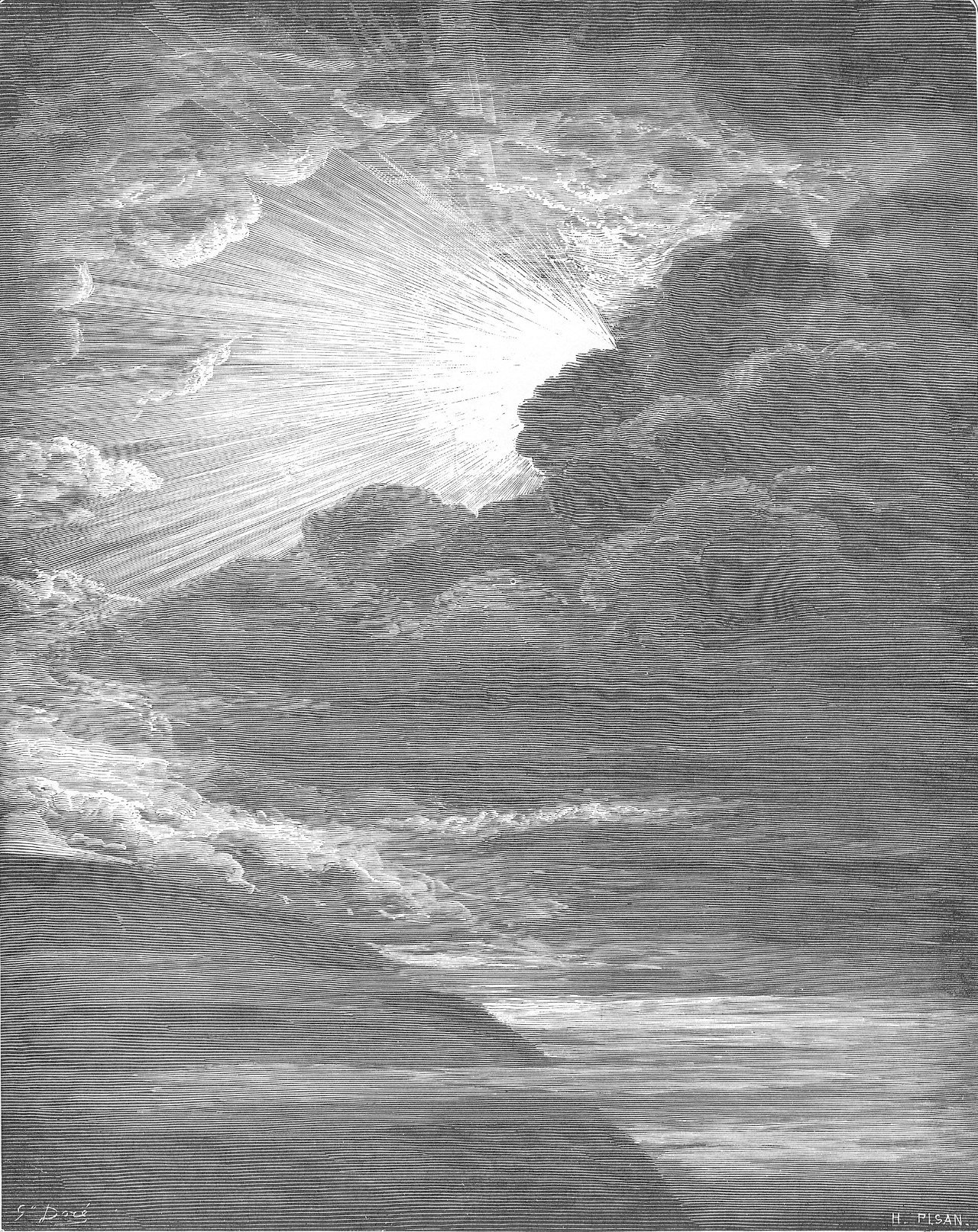
So God did not create because He needed to. Love that was already full overflowed. C. S. Lewis put it memorably: God, who needs nothing, “loves into existence wholly superfluous creatures in order that He may love and perfect them.”⁷
God did not make you because He needed you. He made you because He wanted you. “For thou hast created all things, and for thy pleasure they are and were created” (Revelation 4:11). “Every manifestation of creative power is an expression of infinite love.”⁸
A love that creates value
The Swedish theologian Anders Nygren noticed that the New Testament’s word for God’s love, agape, works in the opposite direction from ours. Human love is drawn by something attractive: beauty, usefulness, merit. God’s love, Nygren said, is spontaneous and unmotivated. It does not ask whether we deserve it. It reaches out first. In his words, “Agape does not recognize value, but creates it.”⁹
We are not loved because we are precious. We are precious because we are loved.
A dog that cannot bite
But love that creates free beings must face a problem: the problem behind every tear and grave in this world.
Every real dog carries some danger. In May 2022, a pack of Rottweilers strayed from a homestead in Ugenya, Siaya County, and mauled a young mother and her one-year-old son to death.¹⁰ Now suppose an engineer offers you a robot dog: it barks, wags its tail and is programmed never to bite. Would you trade your dog for it? Or would you feel loved if your phone flashed “I love you” every time you switched it on? Words that cannot be withheld mean nothing.
A love that cannot say no is not love at all. As the evangelist David Asscherick has put it, love requires freedom, and freedom involves risk.¹¹
“Say yes”
Picture a young man in a flat in Nairobi. For two years he has pursued a woman from his church, and she has gently told him no. Tonight he locks the door, takes a pistol from the drawer and points it at her. “Marry me,” he says. “Say yes.”
Shaking, she says yes. He could march her to the registrar’s office the next morning and she would sign. But does she love him? He has her signature and her obedience. He does not have her heart, and no weapon in the world can get it. The moment he lowers the gun, she will run.
“The exercise of force is contrary to the principles of God’s government,” Ellen White writes; “He desires only the service of love; and love cannot be commanded; it cannot be won by force or authority. Only by love is love awakened.”¹²
So God made us free. “God might have created man without the power to transgress His law... but in that case man would have been, not a free moral agent, but a mere automaton.”¹³ “I have set before you life and death,” God says: “therefore choose life” (Deuteronomy 30:19). And the moment He made free beings, He took a risk.
The risk God took

He knew
Lucifer was created perfect: “Thou wast perfect in thy ways from the day that thou wast created, till iniquity was found in thee” (Ezekiel 28:15). And God, who declares “the end from the beginning” (Isaiah 46:10), saw his fall coming.
Some say God cannot “risk” anything, since He always knows the outcome. But that makes what He did more astonishing, not less. God did not gamble on an unknown. He knew exactly what His love would cost: a rebellion in heaven, a fallen world and the death of His own Son. He exposed Himself to that loss with His eyes open. That is sacrifice decided in advance.
Why not simply leave Lucifer out?
If God knew Lucifer would fall, why not simply never create him? No one would have known. There would have been no sin and no cross.
But think what that would have meant. God would have been quietly creating only those He foresaw would love Him, and silently leaving out the rest. The peace of the universe would have rested on a hidden decision, and the question “Is God’s government truly fair?” would never have been asked in the open, and so never answered.
That is not how God works. “I have not spoken in secret, in a dark place of the earth,” He says. “I the LORD speak righteousness” (Isaiah 45:19). He is the “God, that cannot lie” (Titus 1:2). His government is open and honest. He does not win by rigging the outcome. So He created Lucifer, gave him every gift and every chance, and let the truth come out where the whole universe could see it.
Why not destroy him at once?
The universe was watching. Instant destruction would have proved only that God was stronger. “Had he been immediately blotted out of existence,” Ellen White explains, “some would have served God from fear rather than from love.”¹⁴ So God let the rebellion run its course, to win the great controversy not by force, but by love.
“As thou hast loved me”
How much does God love us? Jesus prays that the world may know that the Father has “loved them, as thou hast loved me” (John 17:23). The Father loves you the way He loves His own Son.
Suppose your dog falls sick and the vet’s bill keeps rising. A small amount, yes. Your savings? Your land? Your life? At some point every one of us would stop, because we love ourselves more than the dog.
If God loved us even a little less than He loves Himself, He too would have stopped. And in Gethsemane He could have. Ellen White writes that Christ “might wipe the bloody sweat from His brow, and leave man to perish in his iniquity. He might say, Let the transgressor receive the penalty of his sin, and I will go back to My Father.”¹⁵
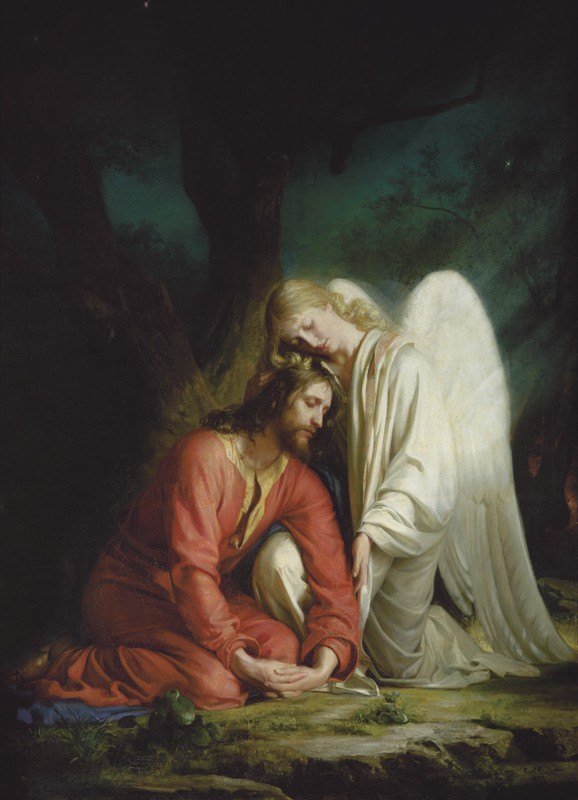
He did not. And it cost the Father too. “Think ye that the Father yielded up His dearly beloved Son without a struggle?” an angel told Ellen White. “No, no. It was even a struggle with the God of heaven, whether to let guilty man perish, or to give His dearly beloved Son to die for him.”¹⁶
A God who can be hurt
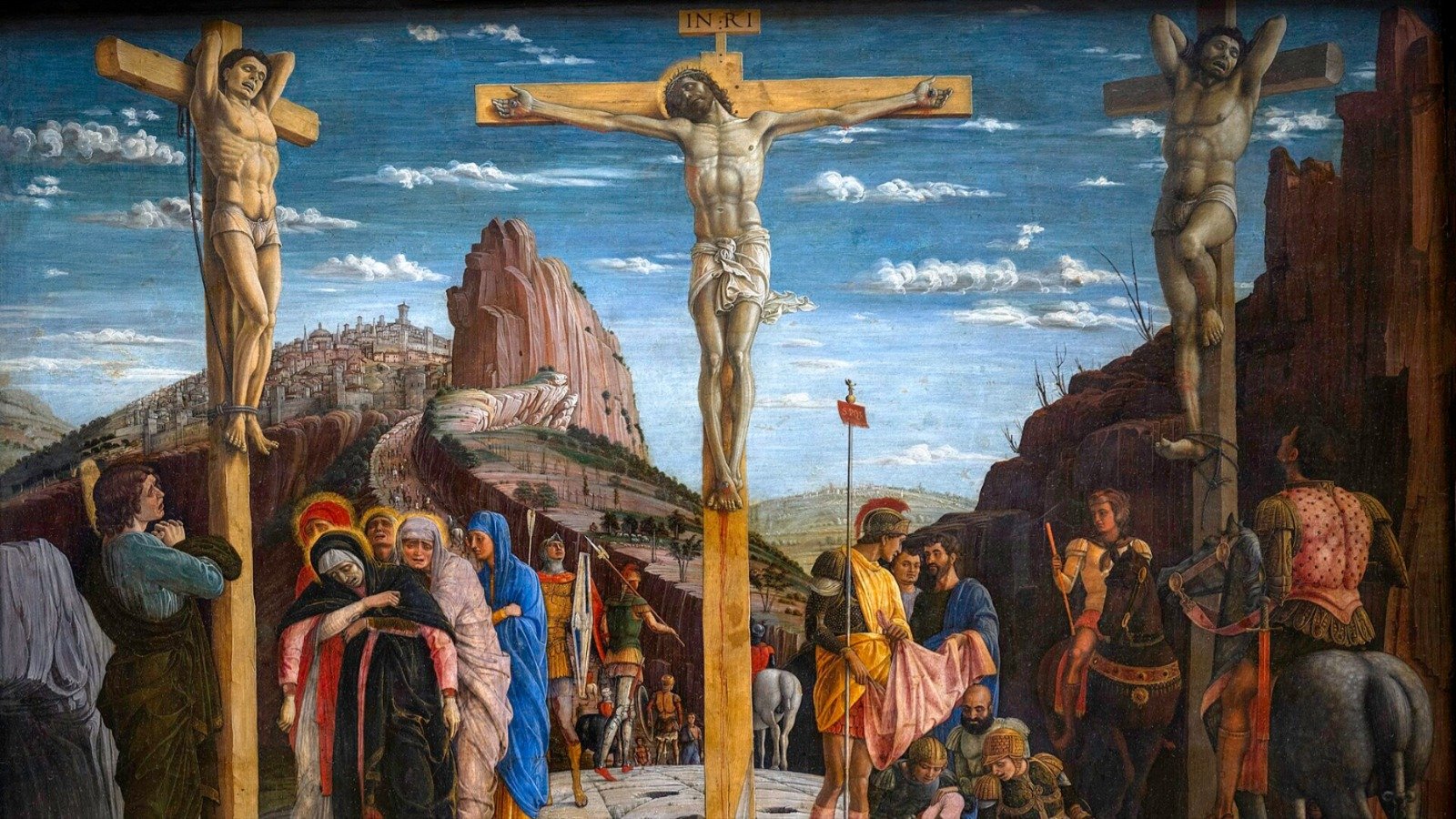
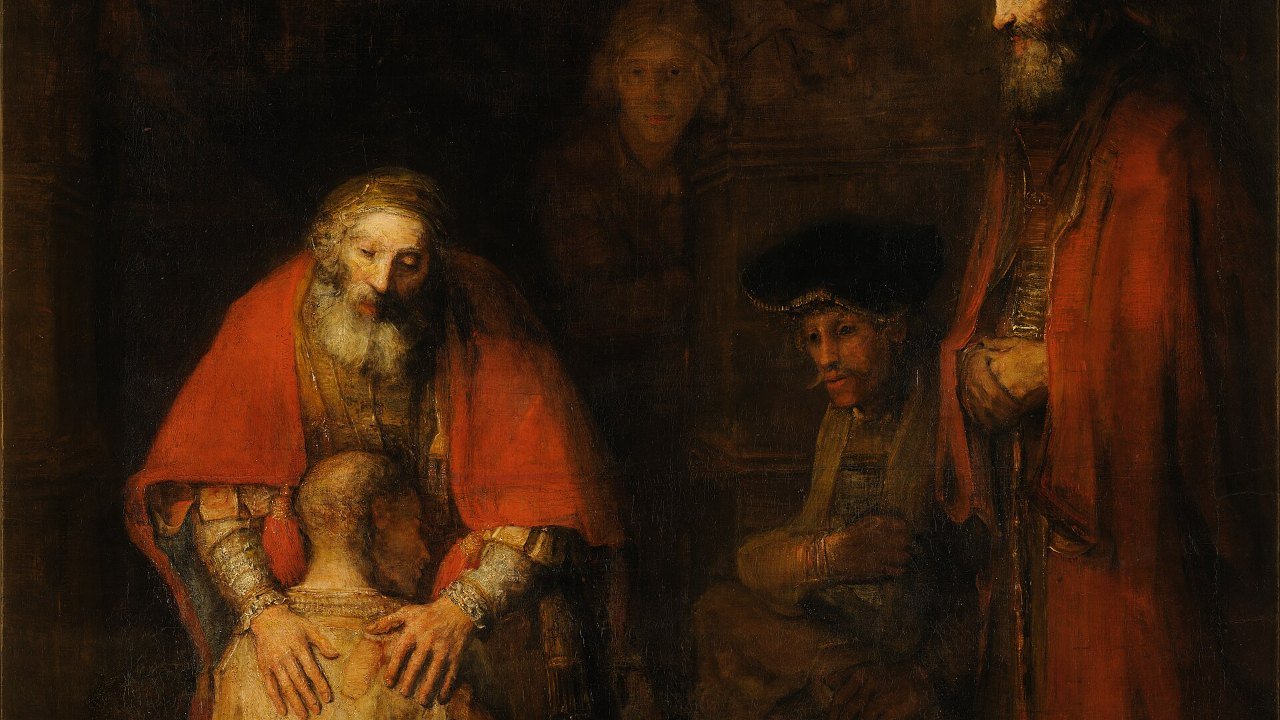
When you picture God, do you see Someone who can be hurt? Many of us imagine that a truly almighty God must be untouchable. But the Bible shows a God whom it “grieved... at his heart” (Genesis 6:6), a Father who runs down the road to meet a wasteful son (Luke 15:20), and a Saviour who weeps over a city that will reject Him (Luke 19:41).
C. S. Lewis observed that to love anything at all is to make yourself vulnerable.¹⁷ God gave His heart away the day He made free creatures. In our redemption, Ellen White writes, “Christ risked all,” and “heaven itself was imperiled.”¹⁸ That is not a weaker God. It is a God whose power serves His love.
The ant in the bucket
You notice an ant drowning in a bucket of water. Your fingers are too big to lift it out without crushing it. Then you remember: this is the ant that bit you this morning, one of a column raiding your kitchen.
Now someone offers you a way to save it. You can become an ant, climb down, and carry it out. But you must remain an ant forever, and the other ants will turn on you and kill you.
Would you do it? None of us would. Yet the distance between us and an ant is nothing beside the distance between the Creator and a creature of dust. Christ died for us “when we were enemies” (Romans 5:10). “His own received him not” (John 1:11). They killed Him. And He is human still, and will be forever. It would have been “an almost infinite humiliation” for the Son of God to take human nature even in Eden; “but Jesus accepted humanity when the race had been weakened by four thousand years of sin.”¹⁹
The next article in this series looks at that: the day the Creator stepped down from His throne.
Love that will not let go
“All the paternal love which has come down from generation to generation through the channel of human hearts... are but as a tiny rill to the boundless ocean when compared with the infinite, exhaustless love of God. Tongue cannot utter it; pen cannot portray it.”²⁰
God made you free because He wanted your love, not your fear. He knew you might turn away, and He made you anyway. When you did, He came after you. “But God commendeth his love toward us, in that, while we were yet sinners, Christ died for us” (Romans 5:8).
Fear of punishment cannot awaken love. Neither can the hope of reward. “It is not the fear of punishment, or the hope of everlasting reward, that leads the disciples of Christ to follow Him. They behold the Saviour’s matchless love... and the sight of Him attracts, it softens and subdues the soul. Love awakens in the heart of the beholders.”²¹
God has staked everything on love. Will your heart answer?
Father, thank You for showing me that You are love. Thank You for making me free, and for loving me when I used that freedom to turn from You. Let Your love awaken love in me. I do not want to serve You out of fear, or for a reward, but because I love You. In Jesus’ name, Amen.
Love requires freedom. Freedom involves risk. And love is worth the risk.
“We love him, because he first loved us.” (1 John 4:19)
This is the first article in a series on the love of God. Next: “The God Who Stooped.”
All Bible quotations are from the King James Version. Ellen White’s writings can be read free at EGW Writings.
Notes
1. Ellen G. White, The Desire of Ages, p. 22 (DA 22).
2. Ellen G. White, Christ’s Object Lessons, p. 415 (COL 415).
3. Ellen G. White, Patriarchs and Prophets, p. 33 (PP 33).
4. Ellen G. White, The Desire of Ages, p. 20 (DA 20).
5. Ellen G. White, The Desire of Ages, p. 20 (DA 20).
6. Ellen G. White, Patriarchs and Prophets, p. 34 (PP 34).
7. C. S. Lewis, The Four Loves (London: Geoffrey Bles, 1960), chapter 6, “Charity.”
8. Ellen G. White, Patriarchs and Prophets, p. 33 (PP 33).
9. Anders Nygren, Agape and Eros, trans. Philip S. Watson (Philadelphia: Westminster Press, 1953), pp. 75–81.
10. “Dogs maul to death woman and her one-year-old child in Ugenya,” The Standard (Nairobi), May 2022.
11. David Asscherick, on X, November 8, 2014: “LOVE requires FREEDOM involves RISK entails RESPONSIBILITY enables GROWTH.” See also Hope TV, Table Talk, "Love, Freedom, Risk".
12. Ellen G. White, The Desire of Ages, p. 22 (DA 22).
13. Ellen G. White, Patriarchs and Prophets, p. 49 (PP 49).
14. Ellen G. White, Patriarchs and Prophets, p. 42 (PP 42).
15. Ellen G. White, The Desire of Ages, p. 690 (DA 690).
16. Ellen G. White, The Story of Redemption, p. 45 (SR 45).
17. C. S. Lewis, The Four Loves (London: Geoffrey Bles, 1960), chapter 6, “Charity.”
18. Ellen G. White, Christ’s Object Lessons, p. 196 (COL 196).
19. Ellen G. White, The Desire of Ages, p. 49 (DA 49).
20. Ellen G. White, Testimonies for the Church, vol. 5, p. 740 (5T 740).
21. Ellen G. White, The Desire of Ages, p. 480 (DA 480).
Take it further
Did this speak to you? Ask for more, or ask us to pray with you.
What's Your Reaction?
Comments 0
No comments yet. Be the first to share a thought.